Language of the Clue: Cognitive Load in Visual Search
I'm bilingual in English and Turkish. While reading Cognitive Load Theory (Sweller, Ayres & Kalyuga, 2011) at the suggestion of my mentor at the Northwestern Hybrid Intelligence lab, I kept wondering: if the note on an image is in my weaker language, does decoding it take working memory that I would otherwise use to search the image? I built a platform to test that.
Try the demo →
You keep going until you feel exhausted (60 minutes at most). Demo mode: answers are marked as test data and never analyzed.
The questions
- Language. Does a clue in your less comfortable language slow down visual search?
- The invisible gorilla. When your attention is on one job, does a weaker-language clue make you more likely to miss something unexpected? (In a famous 2013 study, 83% of radiologists missed a gorilla placed in a lung scan.)
- Fatigue. People keep going until they declare exhaustion. When does performance start to slip, how tired do they say they feel along the way, and does the weaker-language cost grow as they tire?
- Who. How do these differ across age, education and image-reading expertise — from high school students to PhDs to radiologists?
How it works
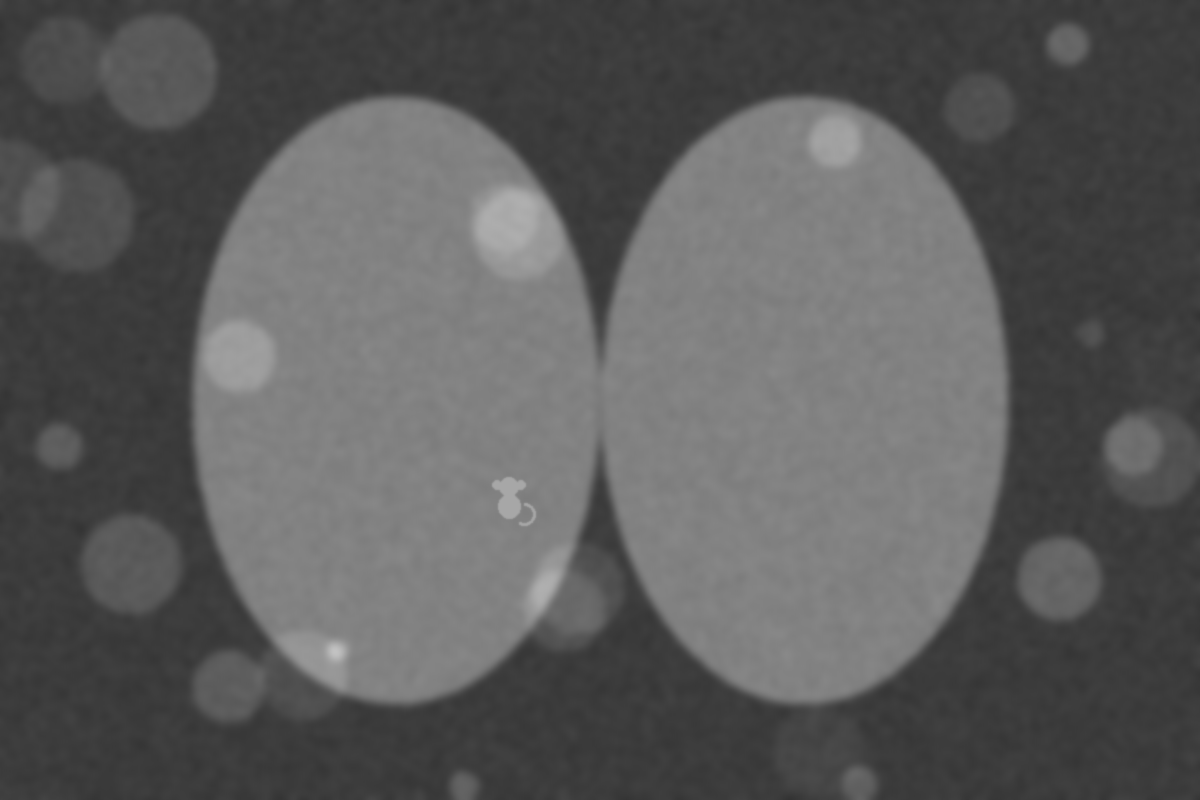
| 1. Surprise image | Find a small ring on a scan. A gorilla is also hidden there and never mentioned. Then: “Did you notice anything unusual?” and “Did you see a gorilla?” Half of each group gets this clue in their comfortable language, half in their weaker one. |
|---|---|
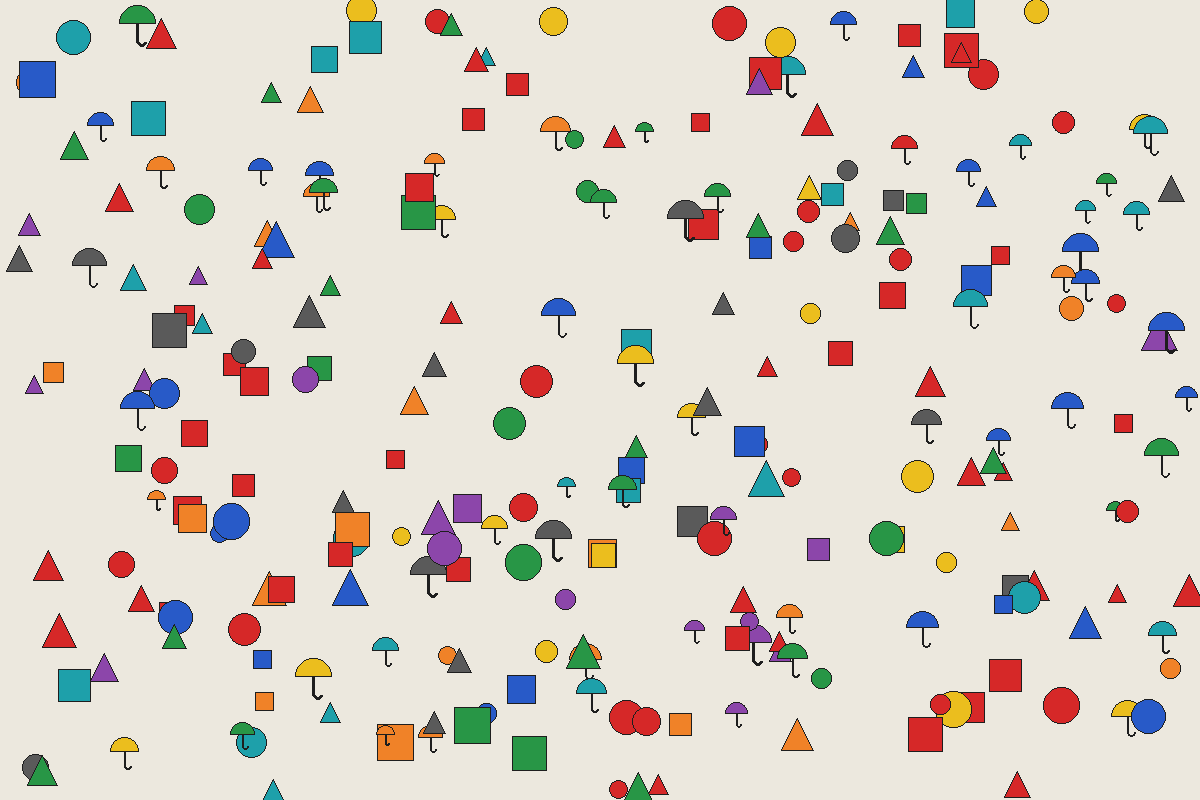
| 2. Rounds | Identical rounds of seven tasks, one item of each in each language: find a named object in a busy scene; spot what is out of the ordinary in a scan; follow written moves on a dice grid; repeat a sequence of lit squares forward or backward; answer a question about a short passage; sort a card by a written rule; and remember words between quick sums. Each person sees half of everything in each language, so everyone is their own comparison. |
| 3. Until exhaustion | People continue until they press “I’m exhausted” (60 minutes at most), rating how mentally tired they feel after every round. A word-memory check comes last. |
| Measures | Speed and accuracy per task, a 1–9 mental-effort rating per item, 0–100 fatigue ratings, time to exhaustion, word retention, and the surprise questions |
| Groups | High school students, adults, PhD students and professors, physicians, radiologists |
| Analysis | Mixed-effects models on response time and effort; gorilla notice rates with a logistic model; a piecewise time model to locate the start of decay; time to exhaustion as survival data; retention hit and false-alarm rates — checked on simulated data |
| Languages | 30 languages; any pair can be tested. Translations await review by native speakers before real data collection. |
Task library
Beyond the seven core tasks, the platform has a library of 64 more tasks modeled on established cognitive tests: attention (flanker, Stroop, visual search), memory (digit and spatial span, n-back), reasoning and planning (puzzles, rule learning), and applied work like reading a schedule, checking a document or tracing code. Every task works in all 30 languages, generates its own original items and is scored on the server. The study uses only a chosen subset, so the session stays focused; the rest are there to adjust the design after review.
Try the task library →
Demo only: nothing you do there is saved. Translations still await native-speaker review.
The pictures
Original images generated by code (no copyrighted puzzle art). The scans here are synthetic placeholders; real de-identified images would come from the lab after approval.
What I'm careful about
- No results claimed. Until real, approved data exist, this is a design and a working platform — nothing more.
- Not a “bilinguals are smarter” claim. Earlier “bilingual advantage” findings often failed to replicate. This compares the same person under two clue languages.
- Ethics first. The platform refuses to treat anything as real data until IRB approval is configured, and it stores no names, emails or IP addresses.
- Credit. The first version of the code was drafted with an AI assistant from a design my father and I worked out; I have studied, tested and changed it. Source: research/lang-load-study.